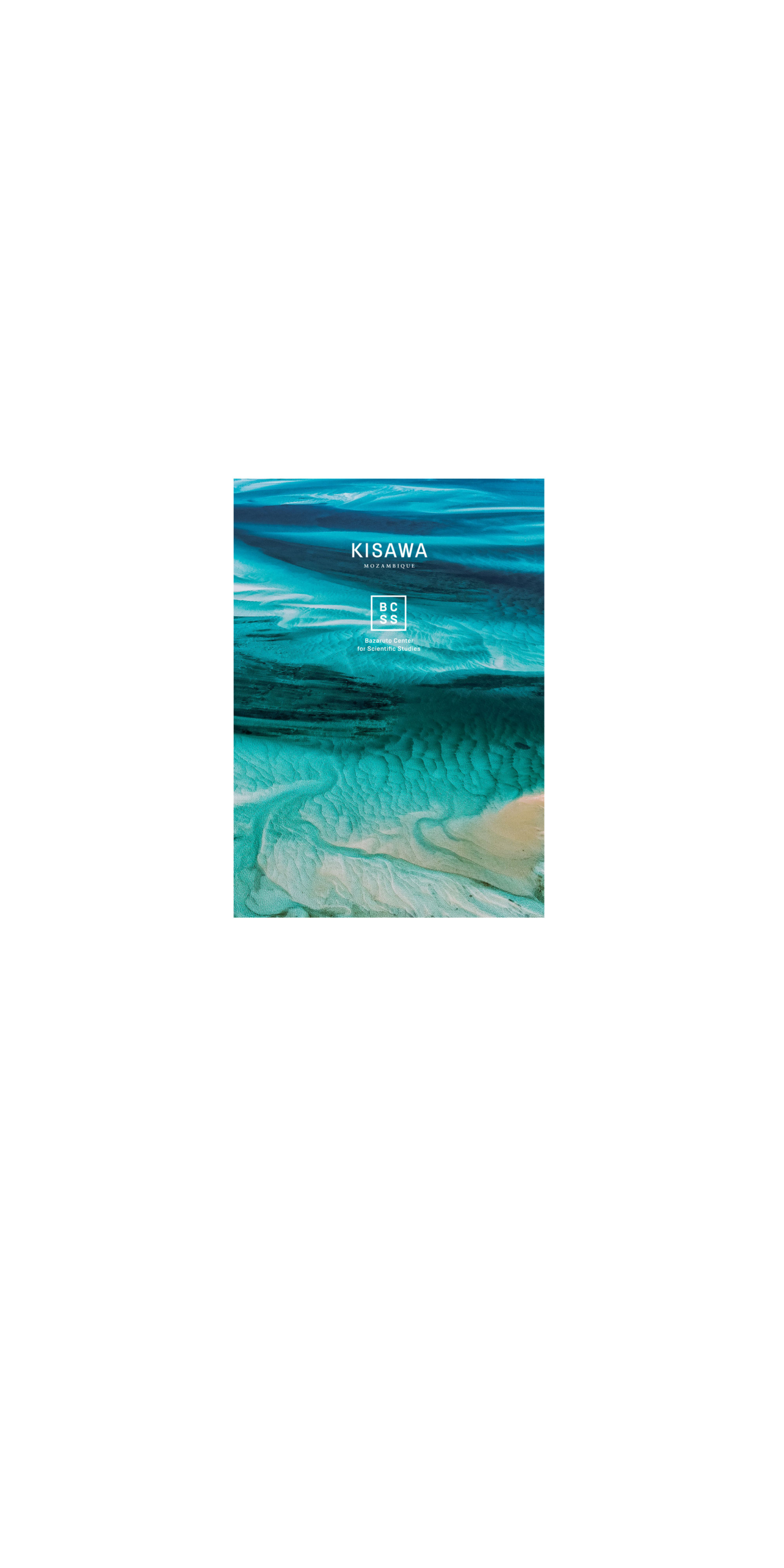

Kisawa x BCSS Impact Report 2025
Long term marine monitoring, biodiversity research & conservation impact in the Bazaruto Archipelago

18 March 2026
The Bazaruto Center for Scientific Studies (BCSS), in partnership with Kisawa Sanctuary, has released its 2025 Annual Impact Report, documenting another year of long-term ocean monitoring, scientific discovery, and sustainable development across the Bazaruto Archipelago and the wider Mozambique Channel.
Operating as a permanent Ocean Observatory, BCSS continues to generate one of the most comprehensive marine monitoring datasets in the Western Indian Ocean. In 2025 alone, BCSS conducted 72 research boat surveys and 94 scientific dive surveys, contributing 432 hours of monitoring effort at sea and 56 hours of underwater survey work. These efforts recorded 353 geo-referenced wildlife encounters, representing over 5,000 individual animals across 23 (including 11 globally threatened) species.
Since the Ocean Observatory inception, cumulative monitoring has now reached 1,081 surveys and 6,486 hours of observation, generating 4,640 wildlife encounters involving more than 26,000 animals and 52 species across the Bazaruto seascape. Importantly, 30% of all encounters involve globally threatened species, including 7% Critically Endangered and 11% Endangered taxa, highlighting the global conservation importance of the region.

The BCSS Ocean Observatory also continued expanding its long-term environmental datasets. In 2025 the Observatory:
– Deployed and recovered 23 monitoring assets, including moorings, sensors and landers,
• Recorded 90,444 environmental datapoints across 28 ocean and weather variables from 12 fixed monitoring stations,
• Generated 297 satellite-derived chlorophyll-a observations across 10 ocean sectors, and
• Initiated water-column biomass monitoring via intelligent buoys across seven fixed stations, producing 51 days of continuous ecosystem observations.
Passive acoustic monitoring (PAM) remains amongst cornerstone objectives of the Ocean Observatory. Between 2023 and 2025 BCSS accumulated over 20,260 hours of underwater acoustic recordings, including 2,190 hours collected during 2025 alone under a structured monitoring protocol supporting long-term marine mammal and soundscape research.
Biological sampling also continued to expand. Over the past five years BCSS has collected 180 zooplankton biosamples supporting trophic-web monitoring, including 36 samples in 2025.
Among the year’s research highlights was the satellite tagging of threatened shark species, including deployments on scalloped hammerhead sharks and the first known application of a satellite tag on a zebra shark, advancing knowledge of movement ecology and habitat use of these iconic animals in the Indian Ocean.
The humpback whale photo-identification initiative also reached an important milestone, documenting 78 individual whales, including 41 newly identified animals during the 2025 season, revealing 5 intra and inter regional matches. This photo-ID study is being conducted in collaboration with the Happywhale platform, strengthening international research and citizen science collaboration.
“I am deeply grateful to our field teams, researchers, partners, and community collaborators whose dedication made this year possible. Their work reflects the shared purpose that defines Kisawa and BCSS. As we move forward, our mission remains unchanged: to deliver rigorous science that supports healthy ecosystems, resilient communities, and a sustainable future for the Western Indian Ocean (WIO) region and beyond.’
– Dr. Mario Lebrato

BCSS continues to expand its collaboration with Universal Plastic, integrating long-term field data with advanced analytics and grant-supported research to better understand the links between plastic pollution, carbon pathways, and marine biodiversity. In 2025, BCSS removed 502 kg of marine debris through 12 clean-ups across five ecosystems and retrieved 26 nets, 42 lines, and 18 debris items, reducing pollution and entanglement risk in the Bazaruto seascape.
Beyond field research, BCSS continues to operate as a regional hub for knowledge sharing and scientific capacity building. In 2025 the centre delivered 24 internationally accredited training courses, including Divemaster and Emergency First Response trainings; authored two peer-reviewed papers and publishing 13 science-based articles translating research findings into accessible public knowledge. On the scientific conferences front, BCSS expanded its global footprint through active presenting at WIOMSA, ECS, and SCOR symposiums, contributing to international marine science and policy frameworks.
In 2025, BCSS and Kisawa were featured in 120+ global media pieces across 15 countries—including WSJ Magazine and Financial Times—with BCSS-led experiences central to international coverage.
Importantly, the 2025 Impact Report marks a methodological step forward. For the first time, BCSS aligned its reporting structure with internationally recognised frameworks including the IFC Operating Principles for Impact Management (OPIM) and B Corp reporting standards, strengthening transparency, comparability, and accountability in environmental and scientific reporting.
Together, Kisawa Sanctuary and BCSS continue to demonstrate the power of a Resort-to-Research model, where hospitality infrastructure directly enables long-term marine science, and scientific insights guide responsible environmental stewardship.
The report also provides further insight into visitor trends, funding structure, governance and decision-making, as well as BCSS’s shared ocean goals with partners and its role in advancing sustainable tourism and recreational diving. It further outlines organisational development, community engagement, and future research priorities shaping the next phase of the BCSS Ocean Observatory.
As BCSS moves into 2026, the Ocean Observatory will continue expanding its datasets, strengthening international partnerships, and contributing open-access knowledge to support ocean conservation in the Western Indian Ocean and beyond.
CITATION: BCSS and Kisawa Sanctuary (2025). The Bazaruto Center for Scientific Studies (BCSS) and Kisawa Sanctuary impact annual report 2025, https://doi.org/10.82174/bcssmz.kisawa.Impact.annual.report.2025
Written by Ekaterina Kalashnikova, BCSS Marketing & Communications Manager
We Suggest